
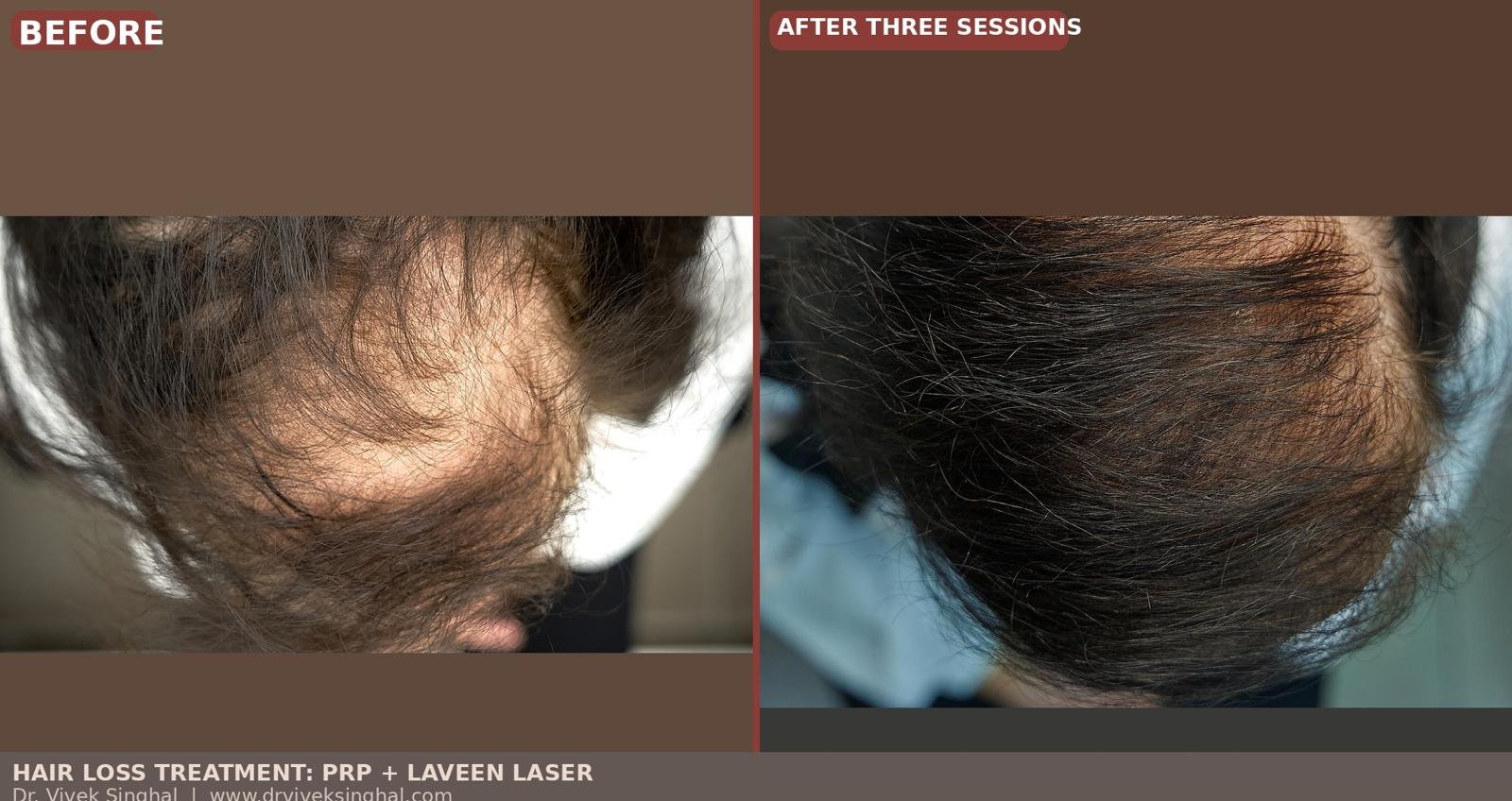
Hair loss affects an estimated one billion people worldwide across all ages, genders and ethnicities. Despite being so common, it remains poorly understood by most of those who experience it – surrounded by myths, dismissed as cosmetic rather than medical, and often treated inadequately or too late. In this guide, Dr. Vivek Singhal provides a thorough, honest account of why hair loss happens, who it affects and how, and what modern evidence-based strategies – including PRP and autologous microcell cluster technology – can realistically achieve.
The Hair Growth Cycle: Understanding the Foundation
Before addressing loss, it helps to understand how hair normally grows. Every hair follicle is an independent miniature organ that cycles continuously through three phases:
Anagen (growth phase): Active hair growth occurs during this phase, which lasts 2 to 7 years in scalp hair. At any given time, approximately 85 to 90% of scalp hairs are in anagen.
Catagen (transition phase): A brief transitional phase lasting 2 to 3 weeks, during which the follicle shrinks and detaches from its blood supply.
Telogen (resting phase): The follicle rests for 3 to 4 months before the old hair is shed and the cycle begins again. Approximately 10 to 15% of hairs are in telogen at any time, meaning shedding of 50 to 100 hairs per day is entirely normal.
Hair loss becomes pathological when the anagen phase shortens, the follicle miniaturises, the normal cycling is disrupted, or the follicle is irreversibly damaged.
Causes of Hair Loss: A Comprehensive Overview
Hair loss has many causes, and correctly identifying the cause is the essential first step before any treatment. The same degree of hair thinning in two different patients may have entirely different underlying mechanisms – and will therefore respond to entirely different treatments.
1. Androgenetic Alopecia (Pattern Hair Loss)
The most common cause of hair loss in both men and women. It affects approximately 50% of men by the age of 50 and 40% of women by the age of 70, though it can begin much earlier.
Androgenetic alopecia is driven by the hormone dihydrotestosterone (DHT), a metabolite of testosterone formed by the enzyme 5-alpha reductase. In genetically susceptible follicles – determined by the density and sensitivity of androgen receptors in the scalp – DHT binds to follicular receptors and progressively shortens the anagen phase. Over successive cycles, the follicle produces increasingly finer, shorter, more pigment-deficient hairs until it eventually stops producing visible hair altogether. This process is called follicular miniaturisation.
In men: Classic pattern – receding hairline at the temples and crown thinning, progressing to a characteristic horseshoe pattern (Hamilton-Norwood classification).
In women: Pattern is different – diffuse thinning over the crown and top of the scalp, preserving the frontal hairline (Ludwig classification). Complete baldness is much less common in women, but significant thinning and widening of the central parting is very common.
The key point: androgenetic alopecia is progressive. The earlier it is identified and addressed, the more hair can be preserved and the better the treatment response.
2. Telogen Effluvium
Telogen effluvium is a diffuse shedding of hair caused by a disruption to the hair cycle – specifically, a large number of follicles being pushed simultaneously from anagen into telogen, leading to excessive shedding 2 to 4 months later.
Common triggers include:
- Major physical stress – surgery, significant illness, high fever, rapid weight loss
- Nutritional deficiencies – iron, ferritin, zinc, vitamin D, vitamin B12, protein
- Hormonal changes – postpartum hair loss (very common), thyroid dysfunction, discontinuation of oral contraceptive pill
- Psychological stress – severe or prolonged emotional stress
- Medications – certain antidepressants, blood thinners, retinoids, chemotherapy agents
Telogen effluvium is typically reversible once the trigger is identified and addressed. However, chronic telogen effluvium (lasting more than 6 months) can persist and is more challenging to manage.
Important: Postpartum hair loss is extremely common and distressing – up to 90% of women experience noticeable shedding 2 to 4 months after delivery. It is almost always self-limiting but can be accelerated in recovery with appropriate support.
3. Alopecia Areata
An autoimmune condition in which the immune system mistakenly attacks hair follicles, causing patchy, well-defined areas of hair loss. It can affect the scalp, beard, eyebrows, eyelashes and body hair.
Alopecia areata affects approximately 2% of the population and can occur at any age. In most cases the follicles are not permanently destroyed – the hair can regrow, though the condition is unpredictable and prone to recurrence.
Variants include:
- Alopecia totalis – complete loss of scalp hair
- Alopecia universalis – complete loss of all body hair
- Ophiasis pattern – band-like loss along the scalp margins
Treatment options include corticosteroids (topical, intralesional or systemic), JAK inhibitors (a significant recent advance), immunotherapy and supportive measures.
4. Traction Alopecia
Caused by chronic mechanical tension on the hair – tight braids, ponytails, extensions, weaves or certain hairstyling practices. Most common at the hairline and temples.
Initially reversible if the tension is removed early. Prolonged traction causes follicular scarring, at which point the loss becomes permanent. Awareness, early identification and behaviour change are the key interventions.
5. Scarring Alopecias (Cicatricial Alopecias)
A group of conditions in which inflammation destroys hair follicles and replaces them with scar tissue, resulting in permanent, irreversible hair loss. Examples include lichen planopilaris, frontal fibrosing alopecia, central centrifugal cicatricial alopecia and discoid lupus erythematosus.
These conditions require early, accurate diagnosis by a dermatologist or trichologist. The priority is stopping the progression – regrowing hair in scarred areas is not possible, though hair transplant can be considered in stable, burnt-out disease.
Frontal fibrosing alopecia deserves special mention: it is an increasingly common scarring alopecia predominantly affecting post-menopausal women, causing a gradually receding hairline with perifollicular inflammation. It is frequently misdiagnosed as androgenetic alopecia, leading to delayed and inadequate treatment.
6. Nutritional and Metabolic Causes
Hair follicles are among the most metabolically active structures in the body. They are highly sensitive to nutritional inadequacy.
Key deficiencies associated with hair loss:
Iron and ferritin: Iron deficiency is extremely common, particularly in premenopausal women, and is one of the most commonly missed contributors to hair shedding. Serum ferritin below 70 ng/ml is associated with hair loss even in the absence of anaemia – a threshold many standard laboratory reports do not flag.
Vitamin D: Vitamin D receptors are present in hair follicles, and deficiency is associated with alopecia areata and telogen effluvium. Optimal levels for hair health are likely higher than the minimum threshold for bone health.
Zinc: An essential mineral for follicular protein synthesis. Deficiency causes telogen effluvium and can worsen androgenetic alopecia.
Biotin (Vitamin B7): Biotin deficiency is a genuine cause of hair loss, but true deficiency is rare in well-nourished individuals. Most commercially marketed biotin supplements are used at doses far exceeding the physiological requirement – the evidence for supraphysiological biotin improving hair in non-deficient individuals is limited.
Protein: Severe caloric restriction or protein malnutrition – including crash dieting – consistently causes significant hair shedding.
Thyroid function: Both hypothyroidism and hyperthyroidism can cause diffuse hair loss. Thyroid function testing is a routine part of any hair loss workup.
7. Medications
Multiple medication classes can cause hair loss, most commonly as telogen effluvium. Important categories include:
- Anticoagulants (heparin, warfarin)
- Certain antidepressants and mood stabilisers
- Retinoids (high-dose vitamin A derivatives)
- Beta-blockers
- Certain cholesterol-lowering drugs
- Hormonal contraceptives (particularly on discontinuation)
- Chemotherapy agents
- Isotretinoin (for acne)
If hair loss coincides with starting or stopping a medication, this should always be investigated.
8. Hormonal and Endocrine Causes
Beyond thyroid dysfunction, several hormonal conditions contribute to hair loss:
Polycystic ovary syndrome (PCOS): One of the most common hormonal disorders in women of reproductive age, PCOS is associated with elevated androgens and is a significant cause of pattern hair loss in younger women. It is frequently the underlying driver of androgenetic alopecia presenting in a woman’s 20s or 30s.
Menopause: The decline in oestrogen at menopause removes a protective effect on hair follicles, often accelerating androgenetic alopecia in women who were previously unaffected.
Insulin resistance: Increasingly recognised as a contributing factor to androgenetic alopecia in both men and women.
9. Scalp Conditions
Seborrhoeic dermatitis, psoriasis, fungal infections (tinea capitis) and chronic scalp inflammation can all contribute to hair shedding. These are frequently overlooked in hair loss evaluations but should always be assessed and treated as part of a comprehensive approach.
Age and Gender Differences: Who Loses What and When
Hair loss is not one condition — its pattern, progression and impact differ significantly across age groups and genders.
Men
Teens to 20s: Early androgenetic alopecia can begin as early as the late teens or early 20s in genetically susceptible men. Often dismissed as “normal” – in fact, this is the optimal time to intervene, when the most follicles can be preserved.
30s to 40s: The most common decade for significant progression. Hairline recession and crown thinning become clearly visible. Psychosocial impact — on self-esteem, confidence and professional perception – is often significant and rarely discussed.
50s and beyond: Advanced androgenetic alopecia is common. Treatment can still improve scalp health, reduce progression and improve the appearance of remaining hair, even if significant regrowth is less achievable.
Women
20s to 30s: Hair loss in younger women is frequently hormonal (PCOS, postpartum, contraceptive-related) or nutritional. It is almost always undertreated because it is underdiagnosed – doctors often dismiss it as normal shedding.
40s to 50s: Perimenopause brings hormonal fluctuations that can trigger or accelerate both telogen effluvium and androgenetic alopecia. This is often the decade in which women first notice significant diffuse thinning.
Post-menopause: Androgenetic alopecia can accelerate significantly without oestrogenic protection. The Ludwig pattern of central thinning is most common.
At any age: Women experience hair loss differently from men psychologically. Hair is more closely tied to femininity, self-identity and social presentation – the emotional burden of hair loss in women is often greater than in men, yet it receives less clinical attention and fewer treatment resources.
Children and Adolescents
Hair loss in children and adolescents most commonly involves alopecia areata, tinea capitis (fungal infection), traction alopecia or nutritional deficiency. Androgenetic alopecia in teenagers, while less common, does occur and should not be ignored. Psychological support is an important component of management in young patients.
6 Common Myths About Hair Loss – Debunked
Myth 1: “Hair loss comes from your mother’s side.”
The genetics of androgenetic alopecia are polygenic – influenced by multiple genes inherited from both parents. While the androgen receptor gene on the X chromosome (inherited maternally) is significant, it is far from the complete picture. Men whose fathers are bald are at significantly increased risk, regardless of their maternal lineage.
Myth 2: “Washing your hair too often causes hair loss.”
Washing does not cause hair loss. Hairs seen in the shower drain are hairs that were already in the telogen phase and would have shed naturally. Frequency of washing does not accelerate this process. Conversely, infrequent washing that allows sebum and product buildup can contribute to scalp inflammation, which may exacerbate existing conditions.
Myth 3: “Wearing hats causes baldness.”
Normal hat wearing does not cause hair loss. Only extreme, sustained mechanical pressure or traction — over months or years — can affect follicular health. Daily hat wearing has no meaningful impact on the hair cycle.
Myth 4: “Hair loss is permanent — nothing can be done.”
This is simply not true for the majority of hair loss. Telogen effluvium driven by a correctable cause is reversible. Early androgenetic alopecia can be halted and partially reversed with appropriate treatment. Alopecia areata can remit spontaneously or with treatment. Even advanced androgenetic alopecia can be significantly improved with a combination of medical therapy, PRP and regenerative treatments. The key is correct diagnosis and early intervention.
Myth 5: “PRP doesn’t work.”
PRP (platelet-rich plasma) for hair loss is one of the most evidence-supported non-surgical treatments available. Multiple randomised controlled trials have demonstrated significant improvements in hair density, hair shaft diameter and hair count with PRP. The critical variables are the quality of the PRP preparation (concentration, platelet activation, growth factor content) and the treatment protocol. PRP performed by an experienced practitioner using a high-quality preparation system produces consistently meaningful results.
Myth 6: “If you still have hair, you don’t need treatment yet.”
This is the single most damaging misconception in hair loss medicine. By the time hair loss is visually noticeable, up to 50% of the hair in that area may already be lost. The earlier treatment begins, the more follicles can be preserved and the better the long-term outcome. Waiting until hair loss is obvious is waiting until much of the battle is already lost.
Treatment Strategies: From Evidence-Based Basics to Advanced Regenerative Medicine
Dr. Vivek Singhal’s approach to hair loss is comprehensive – addressing underlying causes, optimising follicular health, and deploying targeted regenerative treatments where indicated. No single treatment works for everyone; the optimal plan is always individualised.
Foundation: Investigating and Correcting Underlying Causes
Before any treatment, a thorough evaluation is essential:
- Full blood count, iron studies (including ferritin), vitamin D, zinc, B12, thyroid function, fasting glucose and insulin, hormonal profile
- Scalp examination (with dermoscopy where indicated)
- Assessment of medication history, diet, stress and hair care practices
Correcting identified deficiencies is the most cost-effective intervention available. Iron supplementation in a patient with low ferritin can produce noticeable improvements in hair density within 3 to 6 months, with no other treatment needed. This step is frequently skipped – to the patient’s significant detriment.
Oral Supplements: What the Evidence Supports
Targeted supplementation – based on identified deficiencies or evidence of benefit – is a cornerstone of Dr. Vivek Singhal’s hair loss protocol.
Iron and ferritin correction in patients with demonstrated low levels is well evidenced.
Vitamin D supplementation to achieve and maintain optimal serum levels is supported by mechanistic evidence and clinical observation.
Zinc supplementation in deficient patients improves hair shedding and shaft quality.
Marine collagen and marine-derived nutraceuticals (omega-3 fatty acids, antioxidants) have emerging evidence for supporting follicular health and reducing inflammatory contributors to hair loss.
Saw palmetto (Serenoa repens) is a naturally derived 5-alpha reductase inhibitor with evidence supporting mild to moderate reduction in DHT-mediated follicular miniaturisation, particularly relevant in androgenetic alopecia. It is better tolerated than pharmaceutical 5-alpha reductase inhibitors for many patients.
Specific formulated hair nutraceuticals combining these actives in clinically relevant doses offer a practical, evidence-informed supplementation approach. Dr. Vivek Singhal selects supplements based on individual patient profiles rather than a one-size-fits-all protocol.
PRP (Platelet-Rich Plasma) for Hair Loss
PRP is a concentration of the patient’s own platelets, prepared from a blood draw by centrifugation. Platelets contain over 20 growth factors relevant to follicular health, including:
- Platelet-derived growth factor (PDGF)
- Vascular endothelial growth factor (VEGF)
- Epidermal growth factor (EGF)
- Insulin-like growth factor (IGF-1)
- Transforming growth factor (TGF-beta)
When injected into the scalp, these growth factors stimulate follicular stem cells, prolong the anagen phase, promote neovascularisation (new blood vessel formation around follicles) and reverse miniaturisation in susceptible follicles.
What PRP achieves:
- Increased hair density (more hairs per unit area)
- Increased hair shaft diameter (thicker individual hairs)
- Prolonged anagen phase (longer, more sustained growth cycles)
- Reduction in shedding
- Stabilisation of progressive androgenetic alopecia
What PRP does not achieve:
- Regrowth of hair in areas where follicles are already destroyed (scarred alopecias, long-standing complete baldness)
- Results equivalent to hair transplant in terms of density restoration in advanced cases
PRP quality matters enormously. The platelet concentration, activation method and growth factor content of the final PRP preparation vary widely between systems and protocols. Dr. Vivek Singhal uses a rigorously quality-controlled PRP preparation process to ensure consistent, high-concentration platelet delivery.
Treatment protocol: A standard course consists of 3 to 4 sessions at monthly intervals, followed by maintenance treatments every 4 to 6 months. Most patients begin to notice results at 3 to 4 months, with peak results at 6 to 12 months.
Autologous Microcell Cluster Technology
Autologous microcell cluster technology represents one of the most advanced regenerative approaches currently available for hair loss. It involves the preparation and injection of the patient’s own cell-derived microclusters – concentrated biological units containing growth factors, cytokines, extracellular vesicles and cellular signalling molecules – directly into the scalp.
Unlike PRP, which primarily delivers platelet-derived growth factors, microcell cluster technology draws on a broader biological reservoir – providing a more comprehensive regenerative signal to the follicular environment.
The mechanism:
The injected microclusters create a regenerative microenvironment around dormant or miniaturised follicles, stimulating stem cell activation, follicular neo-genesis in susceptible areas, and restoration of the follicular support structure. This addresses not just the growth factors driving the hair cycle but the broader cellular and extracellular matrix environment that sustains follicular health.
Who benefits most:
Patients with early to moderate androgenetic alopecia, patients with chronic telogen effluvium that has not responded adequately to conventional treatment, and patients seeking to maximise the biological potential of their existing follicles before considering surgical options.
Combined protocol:
Dr. Vivek Singhal uses autologous microcell cluster injections in combination with PRP where indicated, creating a synergistic regenerative platform that addresses multiple pathways of follicular decline simultaneously.
Topical Treatments
Minoxidil (topical or oral) remains the best-evidenced topical treatment for androgenetic alopecia, extending anagen and increasing follicular size. It is available without prescription and is most effective when started early. Oral minoxidil at low doses has recently emerged as an effective and well-tolerated option for many patients.
Topical finasteride/dutasteride: Topical formulations of DHT-blocking agents offer localised action with reduced systemic absorption – an increasingly popular option for patients who wish to avoid oral hormonal treatments.
Scalp Health Optimisation
Chronic scalp inflammation – even low-grade – significantly impairs follicular function. Seborrhoeic dermatitis, psoriasis, folliculitis and product buildup all contribute to an inflammatory scalp microenvironment. Treating these conditions with appropriate medicated shampoos, anti-inflammatory agents and scalp care protocols is an undervalued but important component of any hair loss management plan.
Hair Transplant: When and Why
Hair transplant – whether follicular unit extraction (FUE) or follicular unit transplantation (FUT) – remains the only intervention that can restore hair in areas where follicles are permanently gone. However, it is not a treatment for hair loss – it is a redistribution of existing follicles from donor sites.
Hair transplant is most appropriate for patients with stable, well-defined androgenetic alopecia who have adequate donor hair reserves and realistic expectations. It is not appropriate for diffuse active hair loss, scarring alopecias in active phase, or patients without a clear diagnosis.
Medical management before and after transplant – including PRP and microcell cluster technology – significantly improves graft survival, accelerates healing and maximises the longevity of the transplant result.
Building Your Treatment Plan: Dr. Vivek Singhal’s Approach
Every patient who comes to Dr. Vivek Singhal with hair loss receives a structured, individual evaluation – not a generic protocol. The process:
Step 1 — Diagnosis. Identifying the type and cause of hair loss through history, examination and targeted blood testing.
Step 2 — Baseline correction. Addressing nutritional deficiencies, hormonal imbalances and scalp conditions identified in the workup.
Step 3 — Targeted supplementation. A personalised oral supplement protocol based on the individual’s deficiency profile and hair loss type.
Step 4 — Regenerative treatment. PRP, autologous microcell cluster injections, or a combination – selected based on the degree of hair loss, follicular reserve and treatment goals.
Step 5 — Maintenance. Ongoing monitoring, periodic repeat treatments and adjustment of the protocol as the response develops.
Frequently Asked Questions
How do I know which type of hair loss I have?
A thorough consultation with a qualified practitioner is essential. Key distinguishing factors include the pattern of loss, the timeline, associated symptoms, family history, hormonal history, medications and blood test results. Dermoscopy of the scalp provides additional diagnostic information non-invasively.
How many PRP sessions will I need?
A standard course is 3 to 4 monthly sessions, followed by maintenance every 4 to 6 months. The response varies by individual, degree of hair loss, and underlying cause.
When will I see results from PRP or microcell cluster treatment?
The hair cycle means results take time. Initial improvements in shedding are often noticed from 4 to 6 weeks. Visible increases in density and thickness typically emerge at 3 to 6 months, with peak results at 6 to 12 months after completing the initial course.
Can hair loss be completely reversed?
This depends on the cause and how long the follicles have been affected. Early intervention in androgenetic alopecia can produce significant regrowth. Long-standing, severe miniaturisation or scarring is not reversible with medical treatment. Honest expectations – set at the initial consultation – are a cornerstone of Dr. Vivek Singhal’s practice.
Is PRP safe?
PRP uses the patient’s own blood – there is no risk of allergic reaction or disease transmission. Side effects are limited to mild bruising, scalp sensitivity and temporary redness at injection sites.
Can women be treated with the same protocols as men?
The underlying biology is similar, but the treatment approach is adjusted for women – particularly regarding hormonal considerations, scalp characteristics and the pattern of loss. Women often respond excellently to PRP and microcell cluster protocols.
Are supplements alone enough?
For telogen effluvium driven by a correctable deficiency, addressing that deficiency – including with targeted supplementation – may be sufficient. For androgenetic alopecia, supplementation supports but does not replace active treatment.
Book Your Hair Loss Consultation
Hair loss is progressive. The best time to act is before the loss you can see becomes the loss you cannot reverse. Dr. Vivek Singhal offers thorough, individual hair loss consultations — combining diagnosis, evidence-based medical management and the most advanced regenerative treatments available.
Dr. Vivek Singhal — 09 Clinic
Book your consultation at www.drviveksinghal.com
All treatments described are performed by Dr. Vivek Singhal, a qualified medical professional. Individual results and experiences may vary. This article is for educational purposes and does not constitute medical advice. Hair loss diagnosis and treatment should always be guided by a qualified practitioner.